Auspicious Wedding Muhurat Dates Bangalore: Vedic Vivah Guide
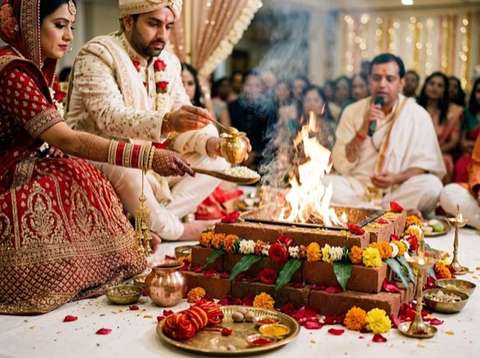
Organizing a traditional North Indian wedding in Bangalore—whether at a heritage palace ground near Palace Road, an expansive convention center in Whitefield, or a luxury resort along Kanakapura Road—begins with one paramount decision: fixing the Shubh Vivah Muhurat.
Unlike modern civil contracts, a Hindu marriage is the thirteenth sacred samskara (Vivah Sanskar) among the Shodasha Samskaras. It binds two souls, ancestral lineages (Gotras), and families across lifetimes, solemnized by our experienced North Indian Wedding Pandit in Bangalore. Fixing the ceremony at a celestial moment when the cosmos supports enduring affection, mutual prosperity, and healthy progeny is the foundation of Vedic astrology.
The Four Pillars of Shubh Vivah Muhurat Calculation
When families consult our Vedic wedding pandit in Bangalore, the wedding date is evaluated across four core Shastric parameters:
| Vedic Factor | Governing Celestial Body | Target Recipient | Astrological Purpose |
|---|---|---|---|
| Guru Bala | Brihaspati (Jupiter) | The Bride (Kanya) | Ensures marital protection, wisdom, noble character in the spouse, and domestic prosperity. |
| Surya Bala | Surya Dev (The Sun) | The Groom (Vara) | Ensures vitality, physical health, social dignity, and executive strength to provide for the household. |
| Chandra Bala | Chandra Dev (The Moon) | Bride and Groom | Fosters emotional compatibility, mutual empathy, peace of mind, and harmonious cohabitation. |
| Shubh Lagna | Rising Ascendant | The Wedding Moment | Determines the precise 2-hour window when the sacred Saptapadi (7 Pheras) are walked around Agni. |
Auspicious Months for North Indian Weddings in Bangalore
According to Shukla Yajurveda and the North Indian panchang, the solar calendar offers two primary wedding seasons:
1. The Autumn-Winter Wedding Season (November – March)
This is the most celebrated wedding window across Bangalore. It begins immediately following Devutthana Ekadashi and Tulsi Vivah in the month of Kartika. November, December, January (post-Makar Sankranti), and February offer pleasant Bangalore weather and numerous auspicious lagnas.
2. The Spring-Summer Wedding Season (April – July)
The months of Vaishakha, Jyeshtha, and Ashadha host magnificent celebrations before the onset of monsoon and Chaturmas. The celestial energy of Akshaya Tritiya represents an immortal, self-proven muhurat (Abujha Muhurat) where no detailed calculation is required.
Critical Inauspicious Periods When Weddings Are Paused
1. Chaturmas (July to November)
Spanning four lunar months from Devshayani Ekadashi to Devutthana Ekadashi, Lord Vishnu enters cosmic contemplation (Yoga Nidra). Auspicious sanskaras involving the expansion of family lineage are paused during this contemplative period.
2. Guru & Shukra Taara Asta (Planetary Combustion)
When Jupiter or Venus passes behind the Sun from Earth’s vantage point, they become combust. Because Jupiter signifies marital longevity for women and Venus signifies conjugal bliss and romance, Vedic marriages are strictly held until both planets reappear in the night sky.
3. Kharmaas / Malmas
The solar transit through Sagittarius (Dhanu) in mid-December to mid-January, and Pisces (Meena) in mid-March to mid-April, is termed Kharmaas. These periods are dedicated to spiritual japa and charitable deeds rather than grand worldly celebrations.
4. Tri-Jyeshtha Dosha
If the eldest child (Jyeshtha son or daughter) marries an eldest child in the month of Jyeshtha under Jyeshtha Nakshatra, it creates Tri-Jyeshtha, which Shastras advise avoiding.
Understanding the Auspicious Vivah Lagna (Ascendant)
While the calendar day is fixed in advance for booking banquet halls and caterers, the Lagna represents the exact 90-to-120 minute window during which the seven sacred pheras must take place.
An auspicious marriage lagna should have benefic planets (Jupiter, Venus, Mercury) stationed in Kendra (1st, 4th, 7th, 10th houses) or Trikona (5th, 9th houses), with the 7th house—representing marital union—completely free from malefic aspects like Rahu, Ketu, or Saturn. Performing the Kanyadaan, Hastamelap, and Saptapadi precisely within this celestial timeframe requires an experienced North Indian wedding pandit in Bangalore who manages the ritual timeline smoothly while chanting authentic Vedic mantras.
Arranging a North Indian Vedic Wedding in Bangalore?
From fixing the exact Lagna muhurat to conducting all pre-wedding rituals (Tilak, Haldi, Mandap, Sangeet) and the complete Vivah Sanskar with Vedic mantras, booking an experienced North Indian wedding pandit in Bangalore—including specialized Bihari and Maithil wedding pandits for authentic regional vivah paddhati—ensures an authentic, punctual ceremony. For evaluation criteria and family gotra traditions, explore our overview of the best North Indian Pandits in Bangalore, or check our dedicated wedding package options.
Explore Wedding Pandit Services in Bangalore →Frequently Asked Questions
How is a North Indian Vivah Muhurat calculated in Bangalore?
A Shubh Vivah Muhurat is determined by aligning four astrological pillars: Surya Bala (Solar strength for the groom), Chandra Bala (Lunar strength for both partners), Guru Bala (Jupiter's protective strength for the bride), and an auspicious Vivah Lagna during the Saptapadi pheras.
Why are there no Hindu weddings during Chaturmas?
Chaturmas spans the four monsoon months from Devshayani Ekadashi to Devutthana Ekadashi. In Puranic tradition, Lord Vishnu enters cosmic sleep (Yoga Nidra). Auspicious samskaras like marriages are paused as cosmic energy is inward-focused.
What is Guru Asta and Shukra Asta in wedding astrology?
When Jupiter (Guru) or Venus (Shukra) moves too close to the Sun, they become combust (Asta). Jupiter is the significator of husband and wisdom for the bride, while Venus governs romance and conjugal harmony. Vedic tradition requires both planets to be luminous (Udaya) for marriage solemnization.
Which Nakshatras are considered best for Vivah Sanskar?
The classical wedding Nakshatras are Rohini, Mrigashirsha, Magha, Uttara Phalguni, Hasta, Chitra, Swati, Anuradha, Moola, Uttara Ashadha, and Uttara Bhadrapada.
Can we solemnize a North Indian wedding on weekends in Bangalore?
Yes, provided the planetary alignments (Tithi, Nakshatra, and Lagna) are auspicious on that specific Saturday or Sunday. While Tuesdays are typically avoided, Fridays and Sundays frequently host magnificent Vedic weddings across Bangalore convention centers.
Which day is good for marriage in Hindu tradition?
In Hindu tradition, Mondays, Wednesdays, Thursdays, and Fridays are generally considered the most auspicious days (Varas) for Vivah Sanskar. Sundays are also acceptable when aligned with a strong Vivah Lagna. Tuesdays and Saturdays are traditionally avoided for marriage unless counterbalanced by an exceptionally strong Shubh Nakshatra and Vivah Lagna verified in the Panchang. Read about our North Indian wedding pandit services in Bangalore or book a wedding pandit.
Which lagna is not good for marriage in Vedic astrology?
In Vedic wedding astrology, any Vivah Lagna where the 7th house (marital happiness) or 8th house (longevity and Mangalya) is occupied by malefic planets like Rahu, Ketu, Saturn, or Mars is considered inauspicious. Furthermore, lagnas matching the bride or groom's Janma Rashi, or an afflicted Mesha (Aries) or Vrishchika (Scorpio) lagna, are avoided for the seven sacred pheras unless neutralized by benefic aspects from Jupiter (Guru) or Venus (Shukra). For a ceremony-specific consultation, explore our North Indian wedding pandit packages or request a wedding booking.