Planning a North Indian Wedding in Bangalore: Why It Needs a Specialist Hindi-Speaking Pandit
Bangalore is home to a large and growing North Indian diaspora — families from UP, Bihar, Rajasthan, Delhi, Madhya Pradesh, Punjab, Uttarakhand, and Mithila who have relocated to the city for work but want to observe their home-state wedding traditions with full shastric fidelity. For these families, the need is not a generic "wedding pandit" but specifically a North Indian wedding Pandit in Bangalore who understands the family's Gotra, Nakshatra, regional ceremony sequence, and who can communicate the meaning of each mantra and vow in Hindi.
A wedding Pandit is not simply responsible for reciting mantras. Depending on the family's tradition and the ceremony being performed, the Pandit may guide the sequence of rituals, explain when family members participate, coordinate the required puja materials and samagri, and conduct the Vedic portions of the wedding.
For North Indian families living in Bangalore, advance planning can make the ceremony considerably easier. This guide explains the major elements to consider when planning a North Indian Vivah Sanskar ceremony in Bangalore, including the role of the Pandit, common rituals, samagri preparation, muhurat coordination, venue planning and questions to ask before booking.
What Is a North Indian Wedding?
A North Indian Hindu wedding generally combines religious rituals, family traditions and ceremonies surrounding the marriage of the couple. The exact sequence is not identical for every family. Wedding customs can differ according to regional background, family tradition, community, lineage and the particular form of Vivah Sanskar being followed.
Commonly recognised elements can include:
- Ganesh Puja: Auspicious invocation for obstacle-free ceremonies
- Var Agamana: Welcoming of the groom and his family
- Jaimala or Varmala: Exchange of sacred floral garlands
- Kanyadaan: Giving away of the bride by parents
- Gathbandhan: Sacred knot tying the couple's garments
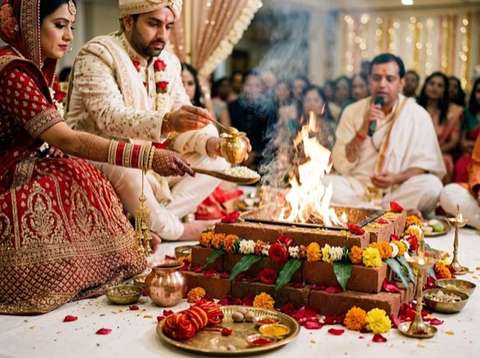
- Vivah Havan: Fire oblations and Vedic prayers for prosperity
- Pheras / Parikrama: Circumambulation around the sacred Agni
- Saptapadi: The seven sacred steps and mutual vows
- Sindoor Daan & Mangalsutra: Auspicious marital symbols
- Ashirwad: Blessings from parents and elders
Some families may include additional ceremonies before or after the main wedding. This is why families should discuss the expected ritual sequence with their Pandit before the wedding day, rather than assuming that every North Indian wedding follows exactly the same format.
What Does a North Indian Wedding Pandit Do?
A wedding Pandit generally guides the religious portions of the ceremony and helps the couple and family understand when particular rituals, offerings and participation are required. Depending on the family's requirements, this can include:
1. Discussing the wedding ceremony
Before the wedding, the family can discuss the wedding date, ceremony timing, Shubh Muhurat, preferred ritual tradition, expected duration, family-specific customs, venue arrangements, and required samagri.
2. Guiding the ritual sequence
The Pandit guides the couple and family through the different stages of the ceremony so that participants know what happens next without confusion.
3. Reciting the required mantras
The religious portions of the wedding are conducted according to the ceremony and tradition being followed, invoking Vedic deities with authentic Sanskrit shlokas.
4. Explaining participation
Family members may have specific roles during rituals such as Kanyadaan and other ceremonies. Clear instructions help parents, relatives, and the couple participate with full devotion and understanding.
5. Guiding the havan and wedding rituals
Where the ceremony includes a sacred fire and associated rituals, the Pandit guides the offerings and sequence according to the ceremony being performed.
Why Hindi Communication Matters for Many North Indian Families in Bangalore
Bangalore is home to families from many parts of India, including North Indian communities from Uttar Pradesh, Bihar, Rajasthan, Delhi, Madhya Pradesh, Uttarakhand, and Punjab.
For a family that prefers Hindi during religious ceremonies, communication with the Pandit can be an important practical consideration. A Hindi-speaking Pandit can explain:
- What is happening during each ritual
- When the couple needs to participate
- When parents or relatives need to participate
- What offerings are required
- What particular mantras or vows represent
- What happens next in the ceremony
This is particularly useful when one or both families are unfamiliar with the exact sequence of the wedding. The goal isn't simply to conduct the ceremony quickly; it is to help the people participating understand the spiritual and emotional flow of the sacred occasion.
Important North Indian Wedding Rituals
While exact rituals depend on the family's tradition, several key ceremonies are universally recognised in North Indian Hindu weddings:
1. Ganesh Puja
Many Hindu ceremonies begin with an invocation seeking blessings for an auspicious beginning. The exact procedure and timing can vary according to the family tradition and Pandit's prescribed ceremony.
2. Jaimala or Varmala
Jaimala, also commonly called Varmala, is the exchange of floral garlands between the bride and groom. It is one of the most recognisable moments of an Indian wedding and usually takes place before the main Vedic wedding rituals.
3. Kanyadaan
Kanyadaan is a significant ritual involving the bride's parents or family and the couple. The precise procedure and wording can vary between traditions. Because this ritual involves family participation, the Pandit should explain beforehand who needs to be present and what their role will be.
4. Gathbandhan
Gathbandhan refers to the symbolic tying together of the couple, commonly involving a cloth or garment connection. It represents the union of the couple as they proceed through the sacred wedding ceremony.
5. Havan
A havan forms a central part of the Vedic ceremony. The Pandit guides the couple through the relevant offerings and mantras associated with the wedding ritual. Families should ask in advance about the required puja samagri list so that the ceremony is never delayed due to missing ingredients.
6. Pheras
Pheras are the ceremonial circumambulations performed by the couple around the sacred fire (Agni). The number and interpretation of the rounds can vary according to tradition (such as 4 pheras in some North Indian communities, followed by Saptapadi). Couples should discuss the specific ceremony they want performed with their Pandit beforehand.
7. Saptapadi
Saptapadi means the seven sacred steps taken together by the bride and groom. With each step, the couple takes a sacred vow for nourishment, strength, prosperity, happiness, progeny, lifelong companionship, and spiritual harmony.
8. Sindoor Daan
Sindoor is applied by the groom to the bride's maang as part of the ceremony, signifying her married status according to North Indian tradition.
9. Mangalsutra
Some North Indian families include Mangalsutra-related rituals in their wedding ceremony. Customs vary considerably between communities and families, so the couple should communicate their preferred ceremony sequence beforehand.
If you are finalising your wedding date in Bengaluru, visit our dedicated North Indian Marriage Pandit in Bangalore service page to review ceremony packages, priest credentials, and muhurat consultation options.
How to Choose a North Indian Wedding Pandit in Bangalore
Finding a Pandit should involve more than simply checking calendar availability on the wedding date. Before confirming a booking, ask the following questions:
- Does the Pandit conduct North Indian wedding rituals? If your family follows a particular regional tradition (such as UP, Bihari Vivah, Maithil Vivah, Marwari, or Punjabi), explain this prior to booking.
- Does the Pandit communicate in Hindi? Confirm that the Pandit can comfortably explain the ceremony and vows in Hindi.
- Can the Pandit explain the ceremony sequence? Ask whether the Pandit will explain the major steps to the couple and family before and during the ceremony.
- What is included in the service? Clarify whether the booking includes Pandit Dakshina, samagri guidance, havan requirements, muhurat consultation, pre-wedding rituals, or main wedding ceremony.
- How long should the ceremony be scheduled for? Ask the Pandit to provide a realistic expected timeframe (typically 2.5 to 3.5 hours for Vedic rites) before finalising the wedding programme.
North Indian Wedding Samagri Checklist
One of the most practical parts of wedding planning is preparing the required puja samagri. The exact list depends on the ritual sequence. Common categories can include:
1. Havan Requirements
- Havan kund (copper or brass)
- Dry mango wood (aam ki lakdi)
- Pure desi ghee & hawan samagri mixture
- Camphor (kapoor), cloves (laung), cardamom (elaichi)
2. Puja Items
- Kalash with mango leaves and coconut (shrifal)
- Akshat (unbroken rice), roli, chandan, haldi
- Fresh floral garlands (jaimala) & loose flowers
- Fresh fruits, betel leaves (paan), and supari
- Puja thali, brass diyas, and pure cotton wicks
3. Wedding-Specific Items
- Pure Sindoor & Mangalsutra
- Sacred thread (janeu / mauli)
- Pili chunri / yellow cloth for Gathbandhan
- Offerings required by the Pandit
Families can also choose complete doorstep pooja samagri kits arranged directly by Pandit Ji Express to ensure no essential Shastric item is omitted.
Planning a North Indian Wedding Ceremony in Bangalore: Step-by-Step
- Step 1: Confirm the wedding date: Discuss preferred dates and Shubh Muhurat with your Pandit.
- Step 2: Confirm the ceremony tradition: Share whether you follow UP, Bihari, Rajasthani, or other regional customs.
- Step 3: Confirm the ceremony sequence: Prepare a simple timeline covering Jayamala, Kanyadaan, Pheras, and Sindoor.
- Step 4: Confirm samagri: Receive the complete checklist well in advance of the wedding date.
- Step 5: Share venue details: Inform the Pandit whether the wedding takes place at a banquet hall, hotel, resort, apartment clubhouse, or home.
- Step 6: Confirm family participation: Brief parents and relatives about their specific ritual roles (e.g. Kanyadaan, Gathbandhan).
- Step 7: Keep buffer time: Avoid scheduling receptions or departures immediately following Vedic rituals.
Can a North Indian Wedding Pandit Conduct a Wedding Anywhere in Bangalore?
Yes. Wedding Pandit services can be arranged for different types of venues across Bengaluru, provided the service covers that location and the venue permits sacred fire ceremonies:
- Marriage convention halls and kalyana mantapas
- Banquet halls in hotels and resorts
- Apartment society clubhouses and community centres
- Private residences and open lawns
- Temple mandapams
Pandit Ji Express regularly conducts North Indian weddings across all key localities of Bangalore, including Whitefield, HSR Layout, Marathahalli, Electronic City, Sarjapur Road, Koramangala, Indiranagar, Hebbal, Yelahanka, Jakkur, and Bellandur.
What Should You Tell the Pandit Before Booking?
When contacting a North Indian wedding Pandit in Bangalore, having the following information ready makes planning seamless:
| Information Needed | Why It Matters |
|---|---|
| Wedding Date | Checking priest availability and auspicious calendar dates |
| Preferred Ceremony Time | Muhurat verification and schedule alignment |
| Bangalore Locality | Travel coordination and timely priest arrival |
| Venue Type | Arrangements for havan kund and mandap setup |
| Bride & Groom Names / Gotra | Sankalp preparation and Shastric recitations |
| Family Tradition | Customising ritual sequence (UP, Bihari, Maithil, etc.) |
| Language Preference | Clear explanations in Hindi throughout the ceremony |
| Samagri Requirement | Whether you need doorstep samagri kits or a checklist |
North Indian Wedding Pandit in Bangalore: A Simple Booking Checklist
Use this practical checklist before confirming your wedding priest:
Related Bangalore Wedding & Ceremony Guides
- North Indian Wedding Pandit in Bangalore (Packages & Booking)
- North Indian Wedding Vivah Samagri Checklist (Printable)
- How Much Does a Pandit Cost in Bangalore? Price & Dakshina Guide
- Puja Samagri List for Bangalore Ceremonies
- How to Book a North Indian Pandit in Bangalore (Step-by-Step)
- Bihari Pandit in Bangalore: Traditional Vivah & Puja Vidhi
- Maithil Pandit in Bangalore: Traditional Mithila Rites
North Indian Wedding Rituals in Bangalore: Quick Answers
What does a North Indian wedding Pandit do?
A wedding Pandit conducts and guides the religious portions of the marriage ceremony, including Sanskrit mantras, Ganesh Sthapana, Kanyadaan, Vivah Havan, Pheras, Saptapadi, Sindoor Daan, and explains the spiritual meaning of the vows to the couple in Hindi.
Can I book a Hindi-speaking wedding Pandit in Bangalore?
Yes. Pandit Ji Express provides experienced, Gurukul-trained North Indian Pandits in Bangalore who speak Hindi fluently, ensuring both families and guests understand every stage of the sacred Vivah Sanskar.
What rituals are included in a North Indian wedding?
Common rituals include Jaimala (Varmala), Ganesh Puja, Kanyadaan, Gathbandhan, Vivah Havan, Pheras (circumambulations around Agni), Saptapadi (seven sacred vows), Sindoor Daan, Mangalsutra, and elder blessings (Ashirwad).
How long does a North Indian wedding ceremony take?
Vedic wedding rituals typically take between 2.5 to 3.5 hours depending on family customs, speed of chanting, and the number of specific regional rites included.
What samagri is needed for a North Indian wedding?
Essential samagri includes a havan kund, dry wood, pure desi ghee, hawan samagri, kalash, coconuts, akshat, roli, floral garlands, yellow cloth for gathbandhan, sindoor, and fruits. Pandit Ji Express can provide a complete doorstep samagri kit upon request.
Can a Pandit conduct the wedding at a resort or apartment in Bangalore?
Yes. Pandits can officiate weddings at marriage halls, banquet halls, luxury resorts, private homes, and apartment clubhouses across Bengaluru, provided the venue allows the sacred havan fire.
Final Takeaway
A North Indian wedding in Bangalore does not have to mean choosing between your family's traditions and the practical realities of organising a wedding in a large city.
The most useful approach is to plan the religious ceremony separately from the broader wedding schedule and confirm the important details with the Pandit in advance. Discuss the tradition, muhurat, ritual sequence, samagri, family participation, language and venue before the wedding day.
For families looking for a North Indian wedding Pandit in Bangalore, those conversations can make the ceremony easier to plan and deeply meaningful for everyone involved.