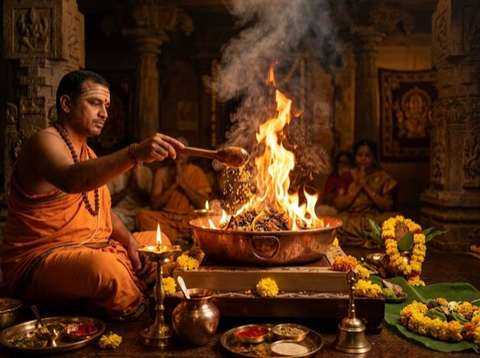
Upanayanam (Janeu or Yagnopavita Sanskar) is the sacred Vedic rite of spiritual initiation marking a young boy's formal entrance into Vedic education, moral discipline, and personal responsibility. Pandit Ji Express provides experienced Hindi-speaking North Indian Vedic Pandits in Bangalore for authentic Upanayanam ceremonies, including Matri Pujan, sacred thread investiture (Yajnopavita Dharana), confidential Gayatri Mantra Deeksha, Brahmacharya vows, traditional alms-seeking (Bhikshatana), and complete Shastric havan.
Vedic Initiation Sanskar
Upanayanam & Janeu Sanskar Pandit in Bangalore
Book an experienced North Indian Pandit in Bangalore for traditional Upanayanam (Janeu Sanskar). Shubh Muhurat guidance, sacred thread investiture, Gayatri mantra deeksha, Bhikshatana vidhi, and auspicious Vedic havan.
The Upanayanam ceremony, literally translating to "drawing near" to the Guru and the divine light of wisdom, is the tenth and one of the most transformative of the sixteen Shodasha Sanskaras. Through this sacred rite, the initiate receives the title of Dvija ("twice-born")—his first birth being biological from his parents, and his second birth being spiritual through the sacred Gayatri Mahamantra and the Vedic tradition.
In Bangalore, North Indian families from Uttar Pradesh, Bihar, Rajasthan, Madhya Pradesh, and Mithila conduct Upanayanam in home residences, society party halls, or traditional kalyana mantapas. Led by Pandit Shyam Sundar Ji with over 15 years of traditional Vedic experience from Varanasi, our ceremonies maintain absolute Shastric purity, ensuring the initiate understands the deep spiritual duties (Dharma) of wearing the Yajnopavita and performing daily Sandhyavandanam.
The ceremony is traditionally performed during the auspicious Uttarayana period (between Makar Sankranti and Ashadha), on a Shukla Paksha tithi with favorable planetary alignments, typically when the young boy is between the ages of 7 and 14, or immediately prior to his wedding ceremony.
Main Ritual Stages of Upanayanam Sanskar
Ritual sequences can vary according to family tradition and the Pandit's guidance. Depending on regional customs and Shakha sampradayas (Shukla Yajurveda, Rigveda, or Samaveda), the ceremony traditionally includes the following stages:
Matri Pujan & Matri Bhojan: Commencing with worship of the ancestral mother deities and an affectionate final meal that the initiate shares with his mother, symbolizing the end of innocent childhood and the dawn of moral discipline.
Yajnopavita Dharana (Sacred Thread Investiture): Consecrating the three-stranded cotton thread with Gayatri and Surya mantras. The initiate is invested with the Janeu over his left shoulder across the right torso, symbolizing his threefold debts: to God (Deva Rina), to Rishis (Rishi Rina), and to Ancestors (Pitri Rina).
Mekhala Bandhan & Kaupina Dharana: Tying the sacred Munja grass girdle around the boy's waist and bestowing yellow or saffron unstitched cotton garments, symbolizing self-restraint, purity of thought, and sensory focus.
Gayatri Mantra Deeksha: Seated beneath a consecrated ceremonial cloth (Kandawa), the father as first guru and Pandit Ji whisper the supreme Savitur Gayatri Mahamantra into the boy's right ear, awakening his inner spiritual illumination.
Danda Dharana & Bhikshatana: Bestowing the sacred Palasha staff representing protection of Dharma. The initiate then performs ceremonial alms-seeking, approaching his mother and elder women with the traditional plea "Bhavati Bhiksham Dehi" to inculcate supreme humility and gratitude.
Samidhadhana Havan & Ashirwad: Feeding sacred dry wood twigs (samidha) into the consecrated Agni while chanting Medha Sukta for sharp intellect and retention, concluding with elders' blessings, dakshina, and a celebratory family feast.
Venue, Home & Hall Setup Considerations in Bangalore
Upanayanam is an elaborate Vedic ceremony requiring organized spatial planning in Bangalore homes, community halls, or temples:
Mandap & Seating Space: A clean floor area of at least 10x10 feet facing East, accommodating the initiate, parents, Pandit Ji, and a consecrated havan kund. Independent homes or society clubhouses are well-suited.
Estimated Ceremony Duration: The complete Shastric Upanayanam takes approximately 2.5 to 3.5 hours. Estimated duration; actual duration varies according to family tradition, havan ahutis, and Pandit's guidance.
Bangalore Locality Coverage: Our Vedic pandits travel across Bangalore including Whitefield, HSR Layout, Sarjapur Road, Electronic City, Bellandur, Marathahalli, Hebbal, and Yelahanka. Review our Bangalore service areas for neighborhood coordination.
Puja Samagri & Family Preparation Checklist
Pandit Ji Express provides guidance on authentic Vedic puja samagri kits. Families should prepare traditional articles ahead of the ceremony day:
Initiate's Sacred Attire: 2 sets of unstitched pure yellow cotton dhotis, cotton angavastram, unstitched white cloth for Gayatri deeksha (kandawa), and clean raw rice and coins for Bhikshatana alms collection.
Sacred Ritual Articles: Consecrated 3-strand pure cotton Janeu threads, Munja grass mekhala, Palasha or Bilva danda (wooden staff), deer skin or kusha grass asana, and Gangajal.
At what age should a boy undergo Upanayanam (Janeu Sanskar)?
According to classical Shastras, Upanayanam is traditionally performed between the ages of 7 and 12, marking the beginning of formal student life (Brahmacharya). However, if not performed during childhood, it is frequently conducted during early adulthood or immediately prior to the Vivah Sanskar (wedding).
What is the spiritual significance of the three threads in the Janeu?
The three sacred strands represent the holy trinity of Brahma, Vishnu, and Shiva; the three gunas (Sattva, Rajas, Tamas); and the initiate's threefold moral obligations: debts to the Divine (Deva Rina), to spiritual teachers and sages (Rishi Rina), and to his parents and ancestors (Pitri Rina).
Does Pandit Ji teach the initiate how to perform daily Sandhyavandanam?
Yes. As part of the Upanayanam Sanskar, Pandit Shyam Sundar patiently instructs the initiate on the daily duties of wearing the sacred thread, proper Gayatri Japa recitation, and the foundational steps of daily morning and evening Sandhyavandanam.
Can the Janeu ceremony be conducted at home in Bangalore?
Yes. If your Bangalore home or apartment has a sufficiently spacious living area (or balcony/terrace) for family seating and a compact havan kund, the ceremony can be held comfortably at home. For larger gatherings with extended relatives, an apartment clubhouse or kalyana mantapa is recommended.
Helpful Ceremony Guides
Explore our practical guides on muhurats, preparation checklists, and budgeting for ceremonies in Bangalore: