Griha Pravesh Muhurat in Bangalore: Auspicious Dates & Vedic Guide
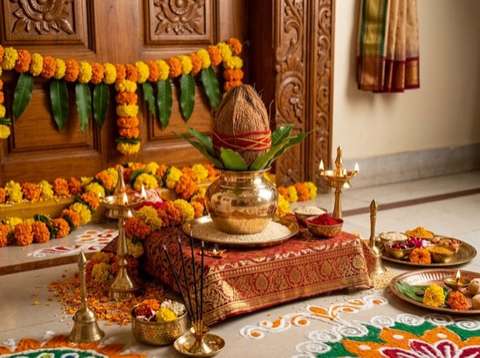
Purchasing a new home in Bangalore—whether an upscale villa in Sarjapur Road, a modern high-rise in Whitefield, or an apartment along the Marathahalli-Outer Ring Road—is one of the greatest milestones in a family's life.
In North Indian Vedic tradition, stepping into a new dwelling is not merely a logistical relocation; it is a sacred consecration performed through complete Griha Pravesh Puja in Bangalore. The timing of this threshold crossing aligns the home’s energy field with cosmic planetary vibrations, inviting Lakshmi (prosperity), Ayushya (health), and Shanti (peace).
The Three Types of Griha Pravesh in Vedic Shastras
Vedic architectural texts, including the Matsya Purana and Brihat Samhita, categorize Griha Pravesh into three distinct categories, each requiring specific astrologic rules:
| Category | Definition & Context | Muhurat Strictness | Primary Consecration Ritual |
|---|---|---|---|
| Apoorva Pravesh | First-time entry into a newly constructed standalone house or fresh builder-handed apartment. | Highest: Must adhere strictly to Shukla Paksha, auspicious solar ingress, and complete Vastu Homa. | Dwar Pujan, Vastu Purusha Mandala, Navagraha Havan, Boiling Milk. |
| Sapoorva Pravesh | Entering an existing resale property, or returning after major architectural remodeling. | Moderate: Calculated according to homeowner’s Janma Rashi and beneficial Nakshatra. | Shuddhi Havan, Vastu Dosh Nivaran, Satyanarayan Vrat Katha. |
| Dwandhava Pravesh | Re-entering a home after displacement due to floods, fires, or prolonged absence exceeding one year. | Standard: Focuses on clearing stagnant energy and re-invoking protective deities. | Shanti Path, Gauri-Ganesh Invocation, Ganga Jal Abhishekam. |
Core Astrological Factors for Bangalore Muhurat Selection
1. Auspicious Tithis (Lunar Days)
Shukla Paksha (the waxing moon phase) is universally preferred for domestic consecration, symbolizing expansion and growth. The most favorable tithis are:
- Dwitiya (2nd): Fosters steady financial growth.
- Tritiya (3rd): Invokes marital harmony and children's welfare (especially Akshaya Tritiya).
- Panchami (5th): Highly auspicious for wisdom and family unity.
- Saptami (7th) & Dashami (10th): Strengthens career prosperity and social honor.
- Ekadashi (11th) & Trayodashi (13th): Auspicious for spiritual and material balance.
- Strictly Avoid: Amavasya (New Moon), Chaturthi (Rikta tithi), Navami, and Chaturdashi.
2. Favorable Nakshatras (Constellations)
The moon should transit fixed (Sthira) or gentle (Mridu) asterisms on your chosen date:
- Fixed Stars: Rohini, Uttara Phalguni, Uttara Ashadha, Uttara Bhadrapada. These provide long-term stability and structural permanence.
- Gentle Stars: Mrigashirsha, Chitra, Anuradha, and Revati. These foster love, artistic harmony, and continuous divine blessings.
3. Auspicious Solar Months (Suryamas)
According to the North Indian Purnimanta panchang, the Sun’s transit through cardinal signs governs domestic entry:
- Magha & Phalguna (Feb–March): Highly beneficial for wealth accumulation.
- Vaishakha & Jyeshtha (May–June): Excellent for progeny and real estate prosperity.
- Kartika (Oct–Nov): Brings divine protection through Deepawali energy.
Inauspicious Periods to Avoid in Bangalore
1. Kharmaas (Malmas / Sun in Sagittarius & Pisces)
Occurs twice a year: typically December 15 to January 14 (Dhanu Sankranti) and March 14 to April 14 (Meena Sankranti). The Sun’s transit through Jupiter's signs reduces creative outward energy; hence, fresh Apoorva Griha Pravesh is traditionally paused.
2. Holashtak (8 Days Before Holi)
The eight days preceding the festival of Phalguna Purnima (Holi) are marked by intense planetary transitions where auspicious samskaras are avoided.
3. Guru & Shukra Taara Asta (Planetary Combustion)
When Jupiter (Guru) or Venus (Shukra) moves too close to the Sun, they become combust (Asta). Since Jupiter governs wisdom and Venus governs domestic bliss, orthodox North Indian families delay housewarmings until the planets rise again (Udaya).
Sample Muhurat Windows for Bangalore Homeowners
Auspicious timings differ based on your family’s birth horoscopes. However, standard citywide shubh muhurats generally align with early morning hours (Brahma Muhurat to Abhijit Muhurat, between 6:30 AM and 11:45 AM).
For personalized muhurat calculation, our head priest Pandit Shyam Sundar cross-references your Janma Nakshatra against the Bangalore ephemeris, ensuring zero planetary afflictions (Chandra Bala and Surya Bala verification).
Ready to Book Your Bangalore Griha Pravesh Ceremony?
Once your auspicious muhurat date is chosen, ensure an authentic ceremony with our senior Gurukul-certified North Indian purohits—including dedicated Bihari pandit services for Griha Pravesh and ancestral housewarming customs. To choose the right priest for your gotra and tradition, book an authentic North Indian Pandit in Bangalore, or view full ritual details and pricing on our dedicated service page.
View Griha Pravesh Puja Service Details →Frequently Asked Questions
How is a Griha Pravesh Muhurat calculated for Bangalore?
A Shubh Griha Pravesh Muhurat is calculated using the local Bangalore sunrise and planetary ephemeris (Panchang). Vedic scholars assess five fundamental limbs: Tithi, Nakshatra, Vaar, Yoga, and Karana, while cross-checking the homeowner's Janma Rashi to ensure harmony.
What are the three types of Griha Pravesh in Vedic Shastras?
The three classical types are: 1) Apoorva Griha Pravesh: Entering a newly constructed home or fresh builder-handed-over apartment. 2) Sapoorva Griha Pravesh: Re-entering a resale property or returning after major remodeling. 3) Dwandhava Griha Pravesh: Moving back into a home after prolonged absence.
Can we do Griha Pravesh during Kharmaas or Adhikmaas?
Vedic tradition strictly advises avoiding Apoorva Griha Pravesh during Kharmaas (mid-December to mid-January and mid-March to mid-April) and Adhikmaas. During these periods, solar energy is considered inward-looking rather than expansive for household prosperity.
Can Griha Pravesh be performed on Saturdays or Tuesdays?
Generally, Tuesdays and Saturdays are avoided for auspicious domestic entries due to the fiery influence of Mars (Mangala) and the heavy karmic weight of Saturn (Shani). Auspicious weekdays are Monday, Wednesday, Thursday, and Friday.
Should we move our furniture in before the Griha Pravesh puja?
In Vedic tradition, only the gas stove, cooking milk, rice, and puja items should enter during the actual muhurat. Heavy living room furniture can be pre-delivered, but the family should not sleep or live in the house before the sacred Vastu Shanti and milk-boiling ceremony is consecrated.